


A Total Protection Roofing System is a roof built from layers that work together, rather than a coat of shingles on a deck. Every new roof we build at SmartHome Roofing & Improvement, as an Owens Corning Platinum Preferred Contractor, includes four of those layers: an ice and water barrier, durable shingles, attic ventilation and underlayment.
Each layer has its own job, and that matters because a roof is only as good as its weakest spot. Great shingles over poor ventilation leave a gap somewhere. A tight deck with nothing guarding the edges does too. The system approach closes those gaps on purpose.
A roof is more than shingles
Picture a roof and you probably picture shingles. They’re what you see from the driveway, and they’re only the top of the story.
Beneath them sit the deck, the underlayment and the barriers that keep water out of the places it likes to get in. Above and below, air has to move in and out of the attic. Choose and install those pieces to work together, and you get a roof built to handle weather as one unit.
Our Total Protection Roofing System® page breaks it into four words: Seal, Defend, Breathe and Comfort. Here’s what each one means.
Seal: ice and water barriers
The first layer is a self-adhering ice and water barrier. It sticks right to the roof deck and protects the most vulnerable areas, the spots where water is most likely to find a way in.
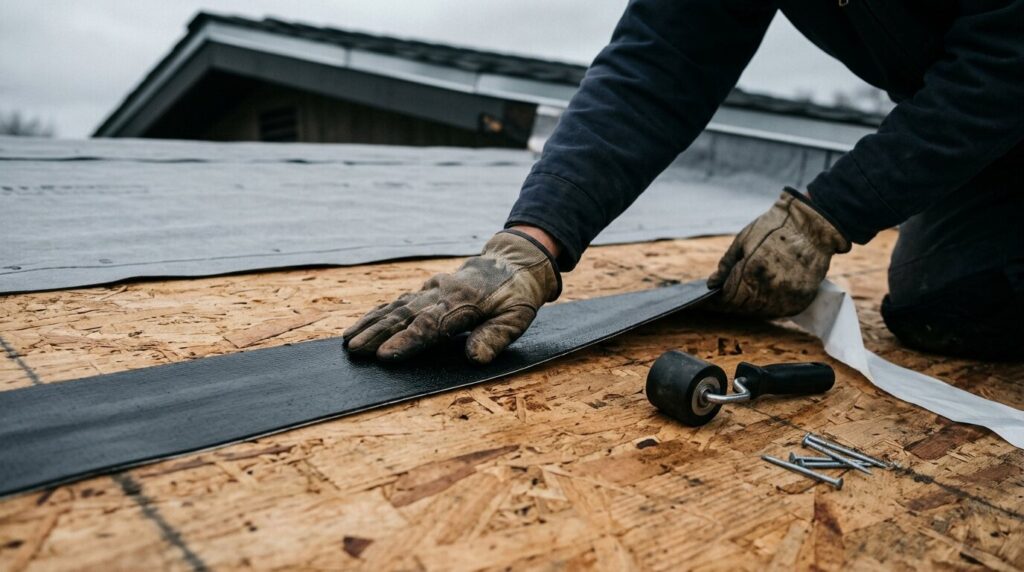
Shingles shed water well when it runs straight down them. Trouble starts when water backs up, gets pushed sideways by wind or sits near an edge. A sealed barrier underneath is the backup for those moments. Want to know which parts of your own roof count as vulnerable? An inspector can point them out and show you in photos.
Defend: shingles made for Kentucky weather
The second layer is the one you can actually see. Our system uses durable shingles designed to withstand Kentucky’s high winds and UV exposure.
A roof gets worn down by sun and wind every day, not just during storms. UV slowly breaks down roofing materials, and wind pulls at shingles and tests every edge. Choosing a shingle built for both is the Defend part of the system.
If you’re curious about shingle options in general, our asphalt shingle roofs page covers what we install.
Breathe: intake and exhaust ventilation
Homeowners forget this layer, and it’s easy to see why. You can’t see it from the street.
Specialized intake and exhaust ventilation manages attic temperature and prevents moisture buildup. Air comes in low and goes out high, which keeps the attic from becoming a trap for heat and damp air. Moisture that sits up there can cause problems that look like roof leaks but don’t come from the outside at all.
A roof with good shingles and poor airflow works against itself. That’s why ventilation is part of the system and not an optional extra.
Comfort: underlayment between deck and shingles
The fourth layer is underlayment. We use it strategically, adding an extra layer of protection between the deck and the shingles.
Think of it as the second line of defense. If wind-driven rain gets past a shingle, the underlayment keeps the water from reaching the wood. It’s quiet work. You’ll never see it once the roof is finished, but it’s one of the reasons the finished roof does its job.
Why this matters in Kentucky
Kentucky roofs have a lot to deal with. Our Somerset team sees wind, heavy rain, humidity, falling limbs and freeze-thaw cycles around Lake Cumberland. In Bardstown, storms and freeze-thaw cycles are hard on historic homes, newer subdivisions and flat commercial roofs alike.
No single material handles all of that. Wind is a shingle problem. Humidity is a ventilation problem. Rain pushed under the edges is a barrier and underlayment problem. A system covers them all at once, which is the whole point.
If you’re already dealing with damage, our storm damage page explains how we inspect and document it.
What to ask before you replace a roof
Whoever you hire, ask what’s going on under the shingles. A quote that lists only shingles tells you very little. Here are a few good questions:
- What goes on the vulnerable areas of the deck before the shingles?
- What underlayment will be used, and where?
- How will the attic get intake and exhaust ventilation?
- What shingle is being used, and how is it rated for wind and UV?
You should get plain answers. At SmartHome, a local specialist inspects your roof, shows you photos and gives you an honest recommendation. You decide what happens next, with no pressure. If you’re planning a full roof replacement, that conversation is where the system gets explained for your specific house.
A Total Protection Roofing System asks one thing of a new roof: that every layer has a job and does it. Seal, Defend, Breathe and Comfort each cover a different way a roof can fail. Pricing and timelines depend on your roof’s size, shape and condition, so we don’t guess from a distance. To see what your roof has now and what it needs, schedule a free roof inspection and we’ll walk you through it in plain language.
Frequently asked questions
Is the Total Protection Roofing System a type of shingle?
No. It’s a full roof system. Shingles are one of four layers, along with ice and water barriers, ventilation and underlayment.
Does every new roof you build include all four layers?
Yes. As an Owens Corning Platinum Preferred Contractor, we make sure every new build includes the Seal, Defend, Breathe and Comfort layers.
How much does a Total Protection Roofing System cost?
That depends on the size and shape of your roof, its current condition and the materials you choose. We’d rather look at your roof than guess. Contact us or book a free inspection, and we’ll walk you through your options.
Why does attic ventilation matter for a roof?
Intake and exhaust ventilation manages attic temperature and prevents moisture buildup. Without it, even a well-built roof can end up working against itself.


